Inglés (Inglaterra/Londres) – Is it time to break up with US big tech? – The Latest
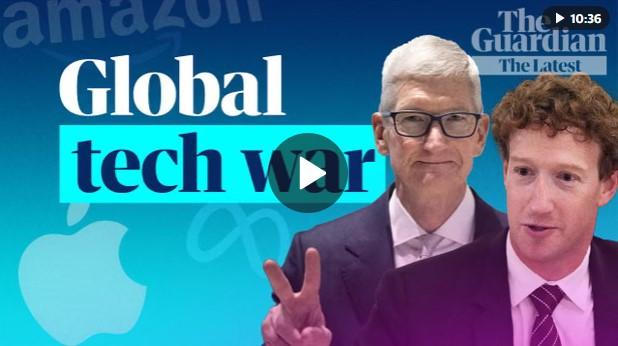
With Donald Trump tearing up the world order, governments across Europe are having to confront the fact that most of the technology they rely on comes from US companies. French officials have taken a step this week to reduce their dependence on US digital infrastructure, announcing they have stopped using Zoom, the US-owned video meeting software, in favour of a French-made program. But how viable is this? And what are the risks? The Guardian’s Michael Safi speaks to the tech journalist Chris Stokel-Walker
An incredible self-own
In 1936, John Scott, son of the late Guardian owner and legendary editor CP Scott, did something unheard of for a media heir: he gave up his stake for the greater good.
After inheriting the newspaper, Scott renounced all financial benefit – bar his salary – in the Guardian (worth £1m at the time and around £62m today) and passed ownership over to the newly formed Scott Trust. The Trust would evolve to have one key mission: to secure the financial and editorial independence of the Guardian in perpetuity.
That means the Guardian can’t be bought. Not by private equity, not by a conglomerate, and definitely not by a billionaire looking for a political mouthpiece.
Our independence means we can say what we want, report on who we want, challenge who we want, and stand up at a time when others are sitting down.
But this unique model also means we depend on readers like you from Colombia to help fund our work. If you would rather the news you read was the result of decisions made by journalists and editors, not shareholders or ultra-wealthy tech bros, then, well, you know what to do:
Support the Guardian on a monthly basis